

If you were told that you have clogged fallopian tubes, or suspect that there could be an alteration, you might wonder if you can still get pregnant.
The response depends on the characteristics of the obstruction and other factors related to fertility. Although this condition can make pregnancy difficult, not all situations are the same and not all people have the same alternatives.
To understand what this diagnosis means, it is important first to know what function the tubes fulfill and how their condition can be evaluated.
What are fallopian tubes and why are they important to getting pregnant?
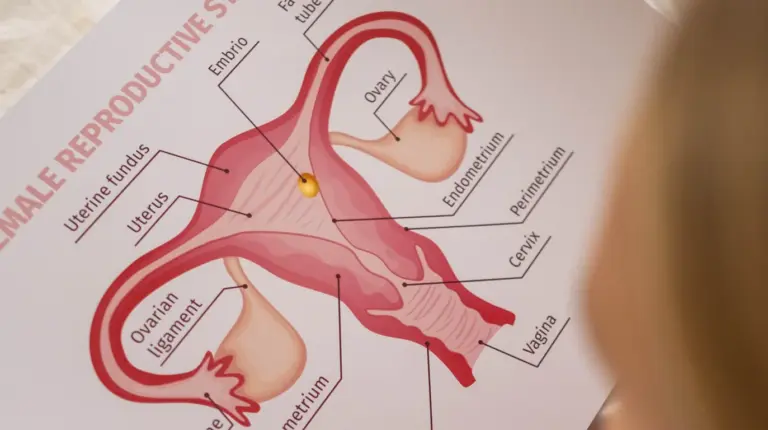
The fallopian tubes are two conduits of the female reproductive system that connect the area close to the ovaries with the uterus.
During the menstrual cycle, one of the ovaries releases an egg that can be caught by a tube, fertilization usually occurs there, when the egg meets a sperm. Then the embryo moves into the uterus.
When a tube is clogged or damaged, this tour can be affected and the chances of achieving pregnancy may change. Therefore, knowing the state of the tubes is an important part of the fertility assessment.
Why can the fallopian tubes be obstructed?
Tubal obstruction can be related to alterations in the tubes or changes in the tissues that surround them.
Among the backgrounds that may be related are:
- Pelvic infections: Some infections can affect your tubes and leave scars.
- Endometriosis: This condition can affect the reproductive organs and generate adhesions.
- Abdominal or pelvic surgeries: In some cases, adhesions that modify the anatomy of the pelvis can form.
- Ectopic pregnancy history: They can be related to alterations in the tubes.
Not all people with this history develop an obstruction. In addition, this condition may not produce obvious symptoms, so a medical evaluation is needed to investigate it.
How do you know if you have clogged fallopian tubes?
In some people, the difficulty in achieving a pregnancy is what leads to investigating if there is a tubal obstruction.
One of the tests used to evaluate the tubes is the Hysterosalpingography (HSG). It is a study that uses a contrast medium and x-rays to observe the uterine cavity and evaluate if the contrast passes through the tubes.
Depending on the background and results, the specialist may consider other studies to complete the evaluation.
It is important to note that a result must be interpreted in its context. In some cases, findings suggesting an obstruction need further evaluation before determining what they mean for pregnancy possibilities.
Can I get pregnant if I have blocked tubes?
It depends on the characteristics of the obstruction and other factors related to fertility.
If one tube is obstructed, it is important to know the state of the other and evaluate the set of reproductive factors. It is not possible to determine the chances of pregnancy only with the information that a tube is affected.
When both tubes are obstructed, the meeting between the egg and the sperm can be impaired, which makes natural pregnancy considerably difficult.
However, the diagnosis does not mean that there are no alternatives to seek a pregnancy. To know them, it is necessary to evaluate what is happening and what are the options that could be considered in each case.
What alternatives are there to achieve a pregnancy?
The options depend on the characteristics of the obstruction, the medical history and other fertility factors. Therefore, there is no single suitable treatment for all people.
In certain cases, the specialist may consider procedures to treat an alteration of the tubes, in others, he can evaluate assisted reproduction techniques.
In vitro fertilization (IVF)
In vitro fertilization is one of the alternatives that can be considered when the tubes are obstructed or present alterations that make pregnancy difficult.
In this treatment, the eggs are obtained from the ovaries and are fertilized with sperm in a laboratory. Then an embryo is transferred to the uterus.
As fertilization occurs outside the body, IVF allows you to look for a pregnancy without depending on the usual path of the egg and the sperm through the tubes.
The relevance of treatment depends on the evaluation of each patient and the other reproductive factors, the specialist can explain the available alternatives and guide the following steps according to the diagnosis.
When to consult with a fertility specialist?
If you have been trying to achieve a pregnancy, you have a history of endometriosis, pelvic infections, pelvic surgeries or an ectopic pregnancy, it may be important to consult to evaluate your reproductive health.
If you have already been diagnosed with a tubal obstruction, you can seek guidance to understand what the result means and what alternatives exist.
You do not need to wait for other symptoms to appear to ask about your fertility, to know the background and to evaluate each situation allows you to guide the following steps.
Know your alternatives with Reprotec
Receiving a diagnosis of obstructed fallopian tubes can lead to many questions, especially when you are looking for a pregnancy. Understanding what it means and knowing the available alternatives can help you make informed decisions.
Here we have specialists in fertility and assisted reproduction who can guide you according to your case.